Kögl Herrschaft Muskateller NV
We have 7 in stock (Inventory is live and accurate)
The Land
Southern Styria is known for steep slopes of opok, marl and limestone. This Muskateller comes from a hill of pure sand. Weingut Kögl sits in Ratsch an der Weinstraße, less than a mile from the Slovenian border, with most of its vines on the steep Stermetzberg. The Südsteiermark DAC covers about 2,788 hectares, 91 percent of them white, with Muskateller the third most planted white grape after Sauvignon Blanc and Welschriesling. Rainfall here is roughly double that of Burgenland and Lower Austria, and Pannonian warmth meets southern European air on slopes that in parts of the region pitch past 40 degrees. Tamara Kögl credits the sand under this parcel with giving the wine delicacy, structure and ripe aromatics.
The Wine
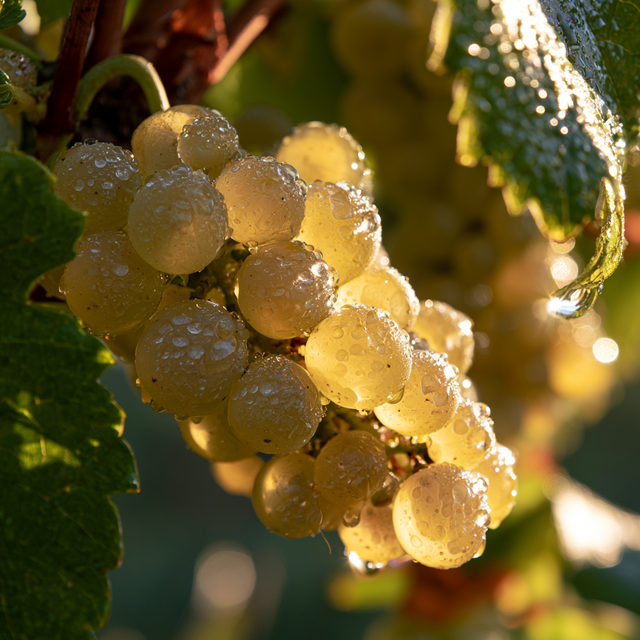
Kögl Herrschaft Muskateller is 100 percent Muskateller, the Styrian name for the Muscat family most often called Gelber Muskateller, or Muscat Blanc à Petits Grains. Grapes are harvested and sorted by hand from the estate's own vines, with no purchased fruit. Fermentation runs on wild yeasts from Kögl's own vineyards, with no added yeast, and the cellar follows Demeter guidelines with as little intervention as possible. The wine is fully dry, with under 3 grams of sugar, about 6 grams of acidity and 13 percent alcohol. It opens with sweet grapes and blooming wild roses, a perfume that suggests sugar, then turns lively and full with rosehip and lemon. The sand shows in the fine, tight structure that carries the finish. Muscat this aromatic without sweetness is rarer than it should be.
The People
Tamara Kögl took over her family's estate young. When a Dutch writer visited in 2012, she was 27, a former Styrian wine queen who had finished her viticulture and winemaking studies in 2010, and she was working the harvest alongside her father while changing much of how her parents had farmed. She trained at the Silberberg wine school in Styria and interned with Franz Hirtzberger in the Wachau. She also led the restoration of the Moarhaus, a 300-year-old wooden farmhouse, into the family's Buschenschank, the Styrian country tavern. She converted the vineyards to organic farming, then to biodynamics, and the estate is now certified organic and Demeter-biodynamic. A flock of Krainer Steinschaf sheep grazes the estate.
Food Pairing
Muskateller from Styria loves the food of its own Buschenschank. Pour it with Backhendl, Styrian fried chicken, alongside potato salad dressed with pumpkin seed oil, where the acidity cuts the crust and the floral lift meets the nutty oil. White asparagus with hollandaise and boiled ham is the classic dry-Muscat match, aroma meeting aroma. Green papaya salad with lime, chili and dried shrimp works because the wine smells sweet but finishes dry enough to handle heat. Pan-fried trout with brown butter and almonds rounds it out. Keep a bottle in the door of the refrigerator for the night you want something that smells like a garden and drinks like a mountain stream.
We ship wine to most states with a $100 minimum order for shipping. We don't ship spirits nor beer.
Weather shipping advisory: Orders placed during times of extreme heat or extreme cold will be held for no charge until more favorable weather returns.
Styria, a region in southern Austria, is a hidden gem celebrated for its crisp, aromatic white wines. Unlike the Danube-dominated regions, Styria's rolling hills and diverse volcanic and sedimentary soils give rise to a different expression of Austrian winemaking. Sauvignon Blanc is a star here, producing intensely aromatic and vibrant wines, alongside excellent examples of Welschriesling, Morillon (Chardonnay), Gelber Muskateller, and Traminer. Styrian wines are known for their bracing acidity, fresh fruit profiles, and often a distinctive herbal edge, making them incredibly refreshing and food-friendly. This region offers a unique and compelling taste of Austria, distinct from the better-known Wachau, and is becoming increasingly appreciated for its singular and characterful wines.
Austria - Styria


Muscat is not one grape but the oldest and most widespread family of wine grapes on earth, with over two hundred members grown from Portugal to Australia. The finest is Muscat Blanc à Petits Grains, responsible for Alsatian Muscat, the sweet Muscat de Beaumes-de-Venise, Italian Moscato d'Asti, and the wines of Samos. Muscat of Alexandria and Muscat Ottonel are its better-known relatives. What unites them is an unmistakable grapey perfume — one of the few varieties that genuinely smells like the fruit it comes from — alongside orange blossom, rose, and musk. It is made in every style imaginable, from bone dry and dusty to intensely sweet and fortified.